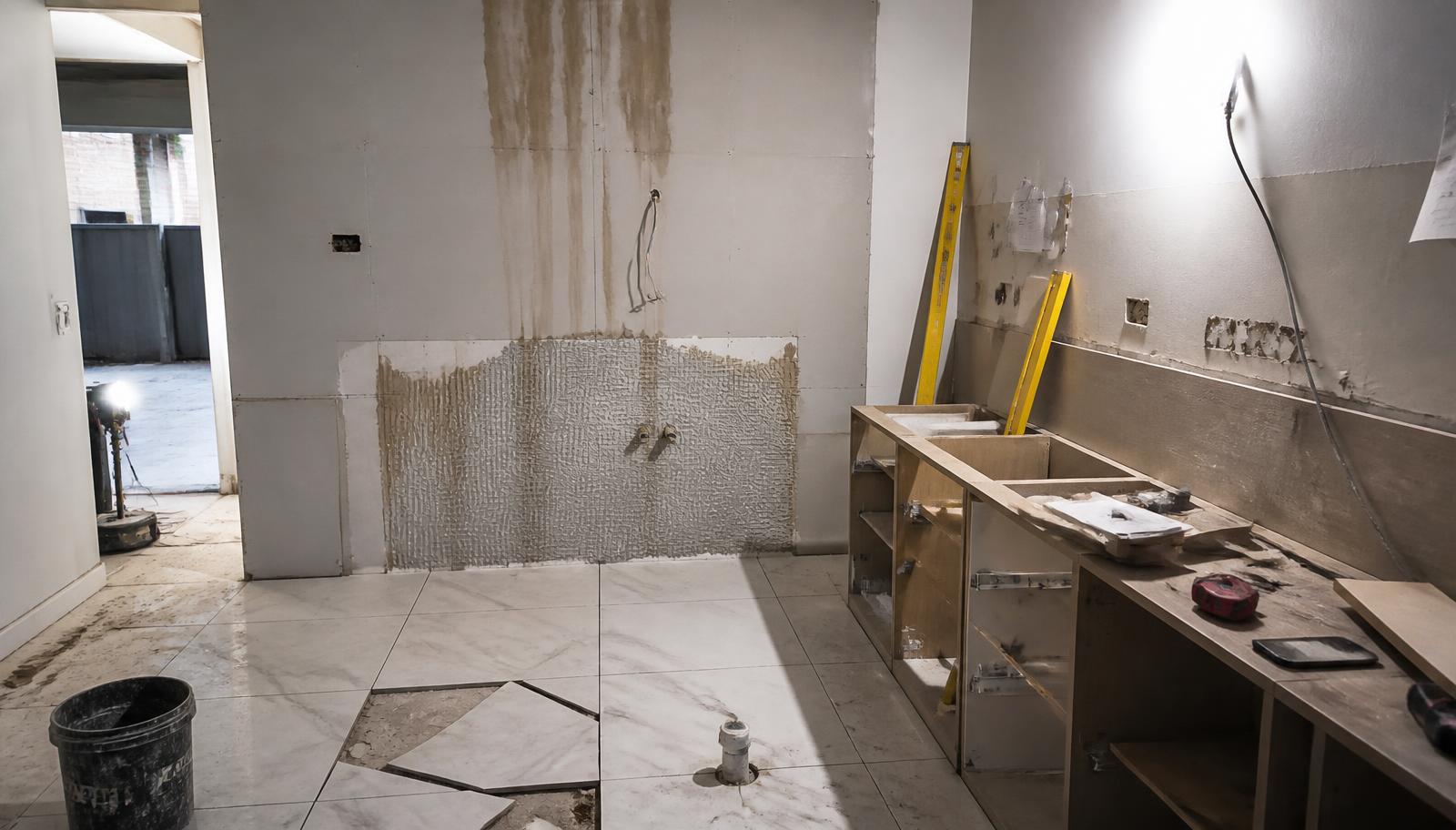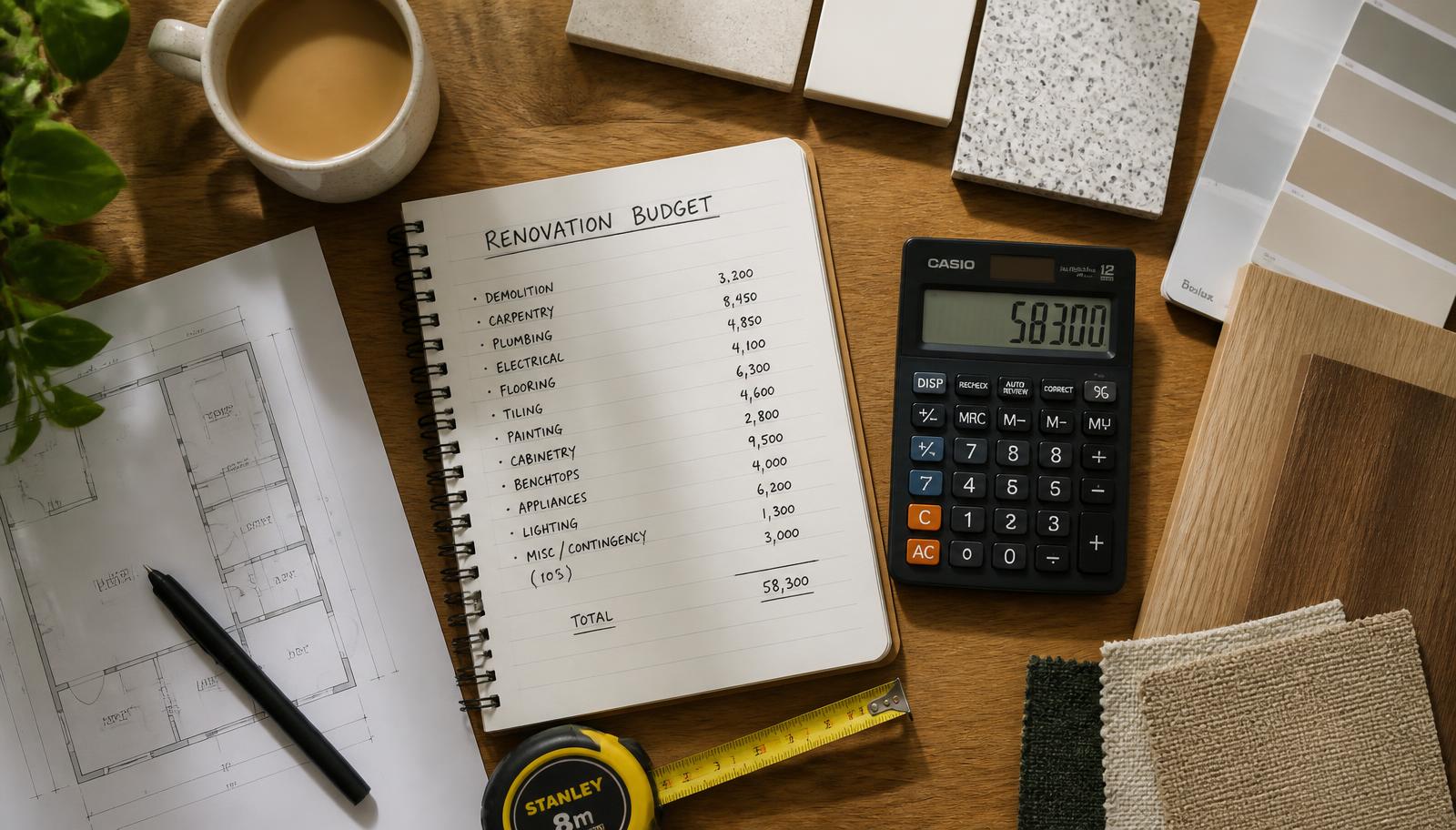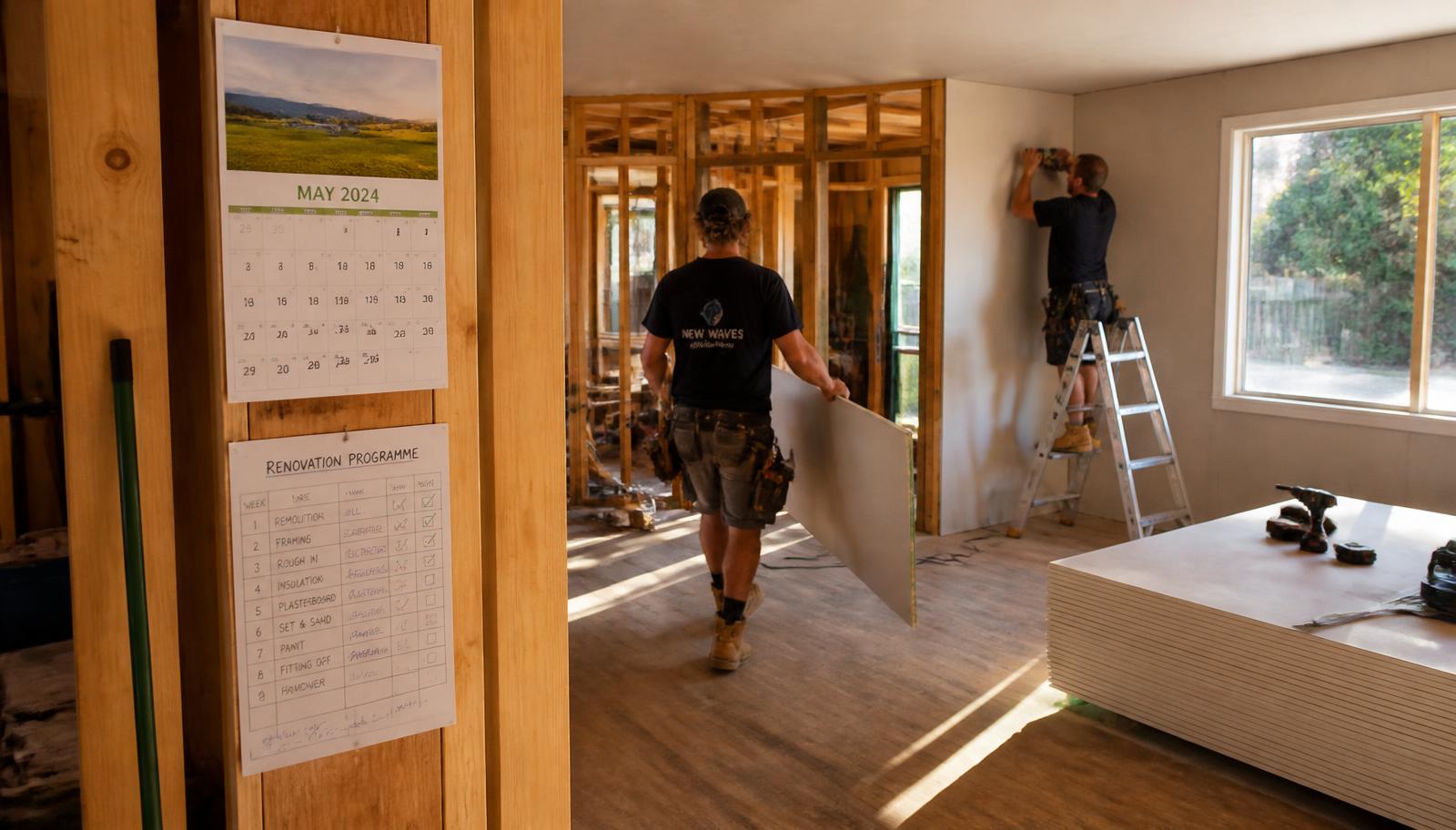

Choosing a renovation builder is one of the highest-stakes decisions most homeowners will make, yet it's often based on little more than a friendly phone call and a rough number. This guide gives you an actual interview script — 27 specific questions grouped by licensing, quoting, contracts, site management, communication and handover — so you can compare Gold Coast builders on facts, not vibes.
Choosing a renovation builder on the Gold Coast comes down to verifying their QBCC licence and insurances, getting a fully itemised written quote (not a one-page estimate), understanding the contract type and payment stages before you sign, and confirming who will actually be on site each day. Ask the 27 questions below of every builder you shortlist and compare answers side by side.
Why an interview script beats a gut feeling
Most homeowners choose a renovation builder the same way they choose a restaurant — a quick look at a website, a couple of photos, a phone call that felt friendly, and a number that seemed reasonable. That approach works fine for dinner. It's a risky way to hand someone $60,000 to $400,000 and the keys to your house for three to twelve months. Because renovation work in Queensland is loosely regulated compared to say, aged care or childcare, the difference between a well-run job and a stressful, over-budget one is almost entirely down to who you hire and how carefully you vetted them before signing anything.
This guide is deliberately structured as an interview script and a due-diligence checklist rather than a general explainer. If you're renovating in Robina, Burleigh Heads, Broadbeach, Southport, Ashmore, Varsity Lakes, Helensvale, Coomera, Hope Island or anywhere else across the Gold Coast, print the questions below, take them to your quoting meetings, and write down the answers. A builder who's confused or evasive about licensing, contracts or programme is telling you something important before you've spent a cent.
Part 1 — Licence and insurance verification (questions 1–6)
Every renovation builder operating in Queensland for work over $3,300 (including labour and materials) must hold a current QBCC contractor licence in a class that covers the scope of your job. A builder who is vague about their licence number, or who tells you their 'business partner' or 'the guy doing the quote' holds the licence instead of them, is a red flag on its own.
Questions 1–6: licensing and insurance
- What is your QBCC licence number, and can I check it on the QBCC public register myself while we're talking?
- What licence class do you hold, and does it cover the full scope of work I need (e.g. Builder – Low Rise, Builder – Open, or a specific trade contractor class)?
- Has your licence, or any previous licence held under a different company name, ever been suspended, cancelled or had conditions placed on it?
- Do you hold current public liability insurance, and can you provide a certificate of currency with my job's address on it?
- Is the job covered by Queensland Home Warranty Insurance, and at what contract value does that cover apply?
- Who are the directors of the company, and have any of them been a director of a different building company that was wound up or deregistered?
The QBCC's online licence search (search 'QBCC licence search' or go via qbcc.qld.gov.au) shows current licence status, classes held, and any relevant history. It takes two minutes and should be done for every builder on your shortlist, not just the one you're leaning towards.
Part 2 — Quoting and scope of works (questions 7–12)
The single biggest source of renovation disputes isn't bad workmanship — it's disagreement about what was actually included in the price. A one-page quote that says 'kitchen renovation — $48,000' tells you almost nothing. A proper quote itemises cabinetry, benchtops, splashback, appliances, plumbing and electrical rough-in, tiling, flooring, painting, and demolition/disposal separately, with brand and model allowances specified for anything not yet chosen.
| Line item | What a compliant quote should show | Red flag if missing |
|---|---|---|
| Scope of works | Room-by-room description of every task included | Vague one-line summary |
| Provisional sums | Estimated allowance for items not yet finalised (e.g. tiling supply), clearly labelled as provisional | Provisional sums lumped into the total with no explanation |
| Prime cost (PC) items | Nominated dollar allowance for tapware, appliances, fixtures — actual invoice reconciled later | No PC items listed even though fixtures aren't chosen |
| Exclusions | Written list of what's NOT included (e.g. asbestos removal, structural engineering, council fees) | No exclusions section at all |
| Site costs | Skip bins, site fencing, toilet hire, power/water usage, protection of existing finishes | Bundled vaguely into 'preliminaries' with no breakdown |
| Contingency | Recommended 10–15% allowance for unforeseen items, disclosed upfront | No mention of contingency, contract silent on variations |
| Payment schedule | Stages tied to defined trade milestones (e.g. frame complete, lock-up, fixing, practical completion) | Payment stages tied to calendar dates rather than progress |
| GST | Clearly stated whether price is GST-inclusive or exclusive | Ambiguous or unstated GST treatment |
Questions 7–12: quoting and scope
- Is this a fixed-price quote, or cost-plus, and what's the difference in how I'll be billed?
- Which items in this quote are provisional sums or PC allowances, and what happens if the actual cost is higher or lower?
- What's specifically excluded from this price?
- How did you calculate the demolition and waste disposal allowance, given site access here?
- If we find something unexpected once walls are opened up (old wiring, water damage, subfloor issues), how is that priced and approved?
- Can I get this quote itemised by trade and room so I can compare it line-by-line with other quotes?
Comparing three quotes without comparing apples to oranges
- Request an itemised quote from each builder, not just a lump sum — ask directly if they won't offer one.
- Lay out each quote in a spreadsheet by trade category (demolition, carpentry, electrical, plumbing, tiling, painting, cabinetry, site costs).
- Flag any category where one builder's number is materially lower or higher than the other two — that's usually where a scope difference is hiding, not a genuine saving.
- Check that all three quotes assume the same fixtures, finishes and brand allowances — a $15,000 gap often comes down to one builder pricing a $400/m² tile and another pricing an $80/m² tile.
- Confirm each builder's payment schedule and contract type side by side, since deposit and progress payment terms affect your cash flow, not just the headline price.
- Ask each shortlisted builder for two or three addresses of similar completed jobs (with the owner's permission) that you can drive past or view externally.
- Make your final decision on a combination of scope clarity, contract terms, communication during quoting, and price — in that order, not price alone.
Part 3 — Contracts, deposits and payment stages (questions 13–17)
In Queensland, domestic building contracts for renovation and new home work generally fall into two QBCC-regulated categories: Level 1 (contract price over $20,000) and Level 2 (between $3,300 and $20,000), each with mandatory content requirements and maximum deposit limits. A written, dated, signed contract using one of these forms (or an equivalent HIA/Master Builders contract) isn't optional paperwork — it's your main legal protection if something goes wrong.
| Contract value | Typical contract type | Maximum deposit | Progress payments |
|---|---|---|---|
| $3,300 – $20,000 | QBCC Level 2 domestic building contract | Generally capped at 10% of contract price | Tied to agreed stages or lump sum on completion |
| Over $20,000 | QBCC Level 1 domestic building contract | Generally capped at 10% (5% if contract exceeds $200,000) | Staged payments tied to defined construction milestones, not calendar dates |
| Under $3,300 | No mandatory QBCC contract form required, but written agreement still recommended | No prescribed limit — negotiate in writing | As agreed in writing before work starts |
Questions 13–17: contracts and payments
- Which contract are we signing — QBCC Level 1, Level 2, or an HIA/Master Builders standard form — and is it appropriate for a job this size?
- What is the deposit amount, and how does that compare to the QBCC maximum deposit rules for a contract this size?
- What are the payment stages, and what trade milestone triggers each one?
- How are variations handled — will I always get a written variation document with a price before extra work starts?
- What's the defects liability period after practical completion, and what's covered under statutory warranty after that?
A compliant progress payment schedule pays for work already completed and inspected, not work about to start. If a builder asks for the 'lock-up' payment before the roof is actually on, that's a contract breach worth querying immediately, not after the fact.
Part 4 — Programme and site management (questions 18–22)
Renovating an occupied home is a different logistical challenge to building a new house on a vacant block. Streets in Broadbeach, Southport, Mermaid Beach and Miami are often narrow with limited parking and close neighbours, so how a builder plans deliveries, waste removal and daily site conduct matters as much as their trade skill. Ask specifically how they'll manage a live site around your family, your pets, and your neighbours' driveways.
Questions 18–22: programme and site management
- Who is my main point of contact, and will the same site supervisor or foreman be on site for the duration of the job?
- How many days a week will trades actually be working on my site, and what's the estimated total build programme?
- How do you manage subcontractors — are they employed by you, or independently engaged, and who's accountable if their work is defective?
- How will you protect the parts of my home that aren't being renovated (dust barriers, floor protection, furniture covers)?
- How will waste, skip bins and tradesperson parking be managed given the width of my street?
Part 5 — Communication and documentation (questions 23–24)
You should never have to guess what's happening on your own renovation. Ask upfront how updates will be delivered — a weekly site photo update via text or email, a shared project management app, or a scheduled Friday phone call are all reasonable answers. 'We'll just call you if something comes up' is not a communication plan, it's an absence of one.
Questions 23–24: communication
- How often will I get a progress update, and in what format (photos, written report, phone call)?
- If a variation or unexpected issue comes up, how quickly can I expect a written quote for the extra work before you proceed?
Part 6 — Finishing, handover and quality checks (questions 25–27)
The final weeks of a renovation are where rushed builders cut corners — sloppy paint touch-ups, tiling grout left unsealed, cabinetry doors that don't align, or a defects list that never gets actioned. A professional handover includes a documented defects walkthrough, a final clean, compliance certificates for electrical and plumbing work, product warranties handed over in writing, and — for larger projects — a basic maintenance guide covering things like re-sealing external timber or servicing new appliances.
Questions 25–27: handover and quality
- What does your handover process look like — will we do a joint walkthrough and sign off on a defects list together?
- How long do I have to report defects after handover, and what's your typical turnaround to fix them?
- Will I receive compliance certificates (electrical, plumbing, waterproofing where relevant), product warranties and care instructions in writing?
Red flags that should end the conversation
- A discount offered for paying cash or 'off the books' — this usually means no invoice trail, no warranty insurance, and no contract.
- Reluctance or refusal to provide a written, itemised contract before starting work.
- Pressure to pay a deposit above the QBCC maximum, or to pay it before a contract is signed.
- Vague or evasive answers when asked directly for a QBCC licence number.
- No fixed business address, or a business that only exists as a mobile number and a social media page with no verifiable jobs.
- Trades or 'helpers' on site who the builder can't clearly explain the licensing or supervision arrangement for.
- A quote that's dramatically lower than every other builder's, with no obvious explanation in scope or specification.
How to check work quality before you sign anything
Photos on a website only ever show the best angle of the best job. Where possible, ask to see a current or recent site in person, or drive past a completed job from the outside. Look at the straightness of fascia and gutter lines, the tidiness of the site, and whether external finishes like render, decking or cladding sit flush and consistent. If a builder offers to connect you with a previous client for a phone conversation, take them up on it and ask specifically about communication, how variations were handled, and whether the final price matched the original quote.
Ready to put these questions to a QBCC-licensed Gold Coast renovation team?
Get a fixed-price quoteShortlisting process: a practical step-by-step
- Compile a shortlist of three to four builders with genuine Gold Coast renovation experience — ask friends, check completed local projects, or search suburb-specific results for areas like Robina, Burleigh Heads or Helensvale.
- Run a QBCC licence check on each before booking a site visit — eliminate any that fail this step immediately.
- Book a site measure and briefing with each shortlisted builder, providing the same brief and any plans to all of them.
- Request itemised written quotes with the same inclusions, provisional sums clearly marked, and a stated contract type.
- Ask all 27 questions above (or send them in writing) and note which builders answer clearly versus which are vague.
- Compare quotes line-by-line using the table above, not just the bottom-line total.
- Check a recent or current job in person if possible, and speak to a previous client if the builder offers one.
- Review the proposed contract in full before signing, and confirm the deposit and payment stages match QBCC rules.
Not sure where to start with scope or a rough budget before you even call builders? Try our online renovation planning tool to get an indicative estimate for your project, then bring that scope to the questions above.
Get an indicative budget for your renovation in minutes
Try the AI Renovator