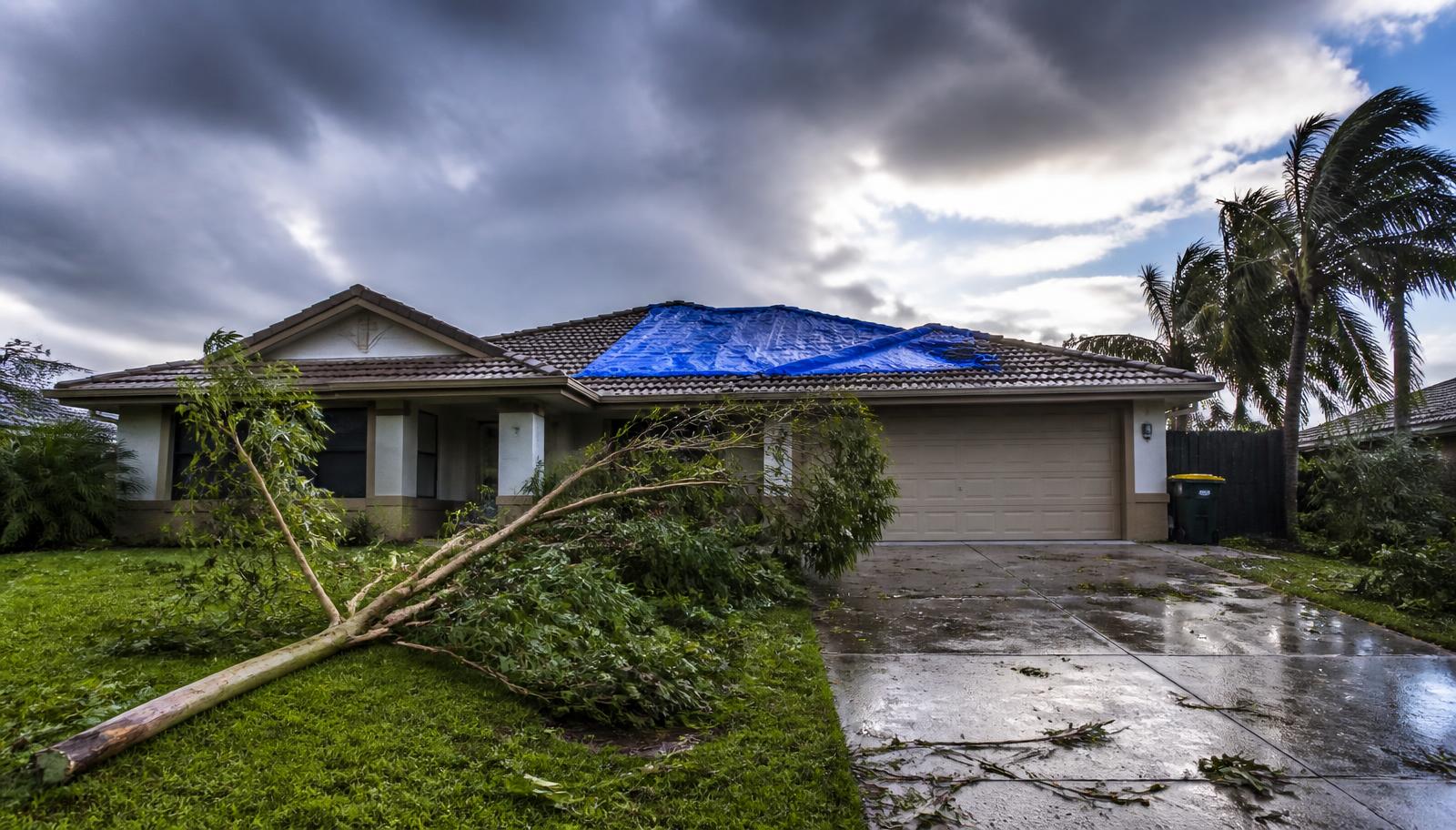
Severe storm season on the Gold Coast and across South East Queensland can turn a calm afternoon into a roof full of hail damage, a flooded garage or a tree through the carport in a matter of minutes. What you do in the first 72 hours after the storm passes has an outsized effect on how quickly your claim is accepted, how much you're reimbursed, and how good the final repair is. This guide walks through the emergency steps, the documentation insurers actually want, how the claims process works from lodgement to repair, and where homeowners often lose money or time they didn't need to.
After a storm, make the property safe first (power, gas, tarping, calling SES on 132 500 for non-life-threatening help), then photograph and video every area of damage before touching anything unnecessary, lodge your claim with your insurer as soon as practical, and get emergency make-safe works done by a licensed trade. Keep every receipt and don't sign an insurer's scope of works until you've checked it against the actual damage.
The first 72 hours: an emergency playbook
Storms across the Gold Coast hinterland and coastal strip — from hail cells rolling through Springfield and Logan to flash flooding pooling around Nerang and Carrara, damaging winds tearing roof sheeting loose in Coomera and Upper Coomera, and salt-laden driving rain forcing water through window seals in Palm Beach and Burleigh Heads — all create a similar sequence of decisions for homeowners. The order matters: safety first, then documentation, then make-safe, then the claim.
- Check for immediate life-safety risks: downed power lines, gas smells, structural collapse, exposed electrical wiring in wet areas. If there's any threat to life, call 000 immediately.
- Turn off power at the meter box if water has entered wall cavities, light fittings or the switchboard, and don't re-energise until an electrician has checked it.
- Call SES on 132 500 for storm-related help such as tarping a roof, removing a fallen tree from a structure, or clearing water — this service is free and is the correct first call for non-life-threatening storm damage.
- Photograph and video every room and the exterior before you move anything, including wide shots for context and close-ups of specific damage, with a timestamp or a dated newspaper/phone screen in shot if possible.
- Stop further damage where it's safe to do so — place buckets under leaks, move furniture and valuables away from wet areas, and use your own tarps if SES can't attend immediately.
- Keep samples of damaged materials (a piece of broken roof tile, saturated insulation, a swatch of stained carpet) rather than throwing everything straight into a skip.
- Contact your insurer to lodge the claim, even if you don't yet have every detail — most insurers let you start a claim with basic information and add documentation later.
- Arrange emergency make-safe works through a QBCC-licensed trade if the property is unsafe to occupy or further damage is likely, keeping all invoices for reimbursement.
- Contact your mortgage provider only if the damage affects the security of the loan (rare for storm damage) — this is not usually a first-72-hours task but is worth noting for major structural loss.
- Start a simple diary of dates, calls, names and reference numbers from every conversation with your insurer, assessor and repairer from day one.
Insurers expect you to take reasonable steps to prevent further damage after a storm event. If a hole in the roof is letting rain into the ceiling cavity, get it tarped immediately rather than waiting days for an assessor — just document the damage first and keep the invoice, as this is a standard reimbursable make-safe cost.
Documenting damage the way insurers actually want it
The single biggest driver of a smooth claim is documentation that leaves no ambiguity about what was damaged, when, and by what event. Assessors are working through a high volume of claims after a significant SEQ storm event, and a homeowner who arrives with an organised file moves through the process faster than one relying on memory and a handful of blurry phone photos.
The photo and video method that works
Walk through the property room by room with your phone in video mode, narrating out loud what you're looking at and when the damage occurred if you know it. Follow the video with individual still photos of each damaged item or area from multiple angles, including a photo that shows the item's relationship to the rest of the room for scale and context. For roof and exterior damage, photograph from ground level, from any accessible vantage point, and include shots of the surrounding property showing the storm's general path (fallen branches, debris, neighbouring damage) which helps corroborate the event.
Building an itemised inventory
For contents damage, list each item with an approximate purchase date, approximate value, and photo reference. For building damage, note the location (e.g. "north-facing bedroom ceiling, above built-in wardrobe"), the type of damage, and any pre-existing condition so it's clear the damage is new. This inventory becomes the backbone of both the claim and, if needed, any later dispute.
Documentation checklist before repairs begin
- Full video walkthrough of every affected room and the exterior
- Close-up photos of each damaged item, surface or structural element
- Wide shots showing damage in context (scale, location, surrounding areas)
- Dated evidence of when the storm occurred (BOM records, news reports, council notices)
- Copies of all invoices for emergency make-safe works and materials
- A sample or offcut of removed damaged materials (tile, insulation, flooring, plaster)
- Serial numbers, purchase receipts or warranty cards for damaged appliances and fittings
- A written diary log of every call, date, reference number and person spoken to
- Your policy schedule and product disclosure statement (PDS) saved somewhere accessible
- Pre-storm photos of the property if available (from real estate listings, past renovation photos, social media)
Understanding your policy before you rely on it
Home insurance policies distinguish between storm, flood, stormwater run-off and actions-of-the-sea in ways that genuinely change what's covered, and this is where many Gold Coast claims run into trouble. "Storm" typically covers wind, hail and rain-driven damage entering through a storm-created opening. "Flood" — inundation from rivers, creeks or overflowing waterways — is a separate, often optional cover under the standardised flood definition in Australian insurance law, and many older or budget policies exclude it entirely. Stormwater run-off pooling from saturated ground (common in low-lying pockets near Nerang and Carrara after heavy rain) can fall into a grey area depending on the specific policy wording, and "actions of the sea" (storm surge, king tide inundation) is frequently excluded outright for coastal properties.
| Damage type | Typically covered under | Common issue |
|---|---|---|
| Wind-driven rain through a storm-damaged roof | Storm cover | Usually covered if the opening was storm-caused |
| River or creek flooding | Flood cover (often optional) | May be excluded if flood cover wasn't taken up |
| Stormwater pooling from saturated ground | Varies by insurer | Definition-dependent; get it in writing |
| Storm surge or king tide inundation | Actions of the sea (often excluded) | Coastal properties should check this specifically |
| Gradual water ingress from a pre-existing leak | Not storm damage | Insurers distinguish sudden events from wear and tear |
| Damage from a tree that was already dead/diseased | May be reduced or declined | Maintenance obligations can affect the outcome |
Also check your sum insured against current rebuild costs. Underinsurance — where your sum insured is lower than the actual cost to rebuild — can mean the insurer only pays a proportion of a claim even for damage well under the total sum insured, depending on the policy's average clause. If you haven't reviewed your sum insured in a few years, given how much building costs have moved since 2020–2022, it's worth checking against a current rebuild estimate before you need to rely on it, not after. Confirm your excess amount, whether temporary accommodation is included and for how long, and whether landscaping, fencing and outdoor structures like decks and pergolas have separate sub-limits.
Questions to ask your insurer when you lodge
- Is this event classified as storm, flood, or stormwater run-off under my specific policy?
- What is my excess for this claim, and is there a separate excess for flood or actions of the sea?
- Am I covered for emergency make-safe works, and up to what amount, before assessment?
- Can I use my own QBCC licensed contractor, or must I use the insurer's panel?
- Is temporary accommodation included, and for how long, if the home is uninhabitable?
- What is the expected timeframe for an assessor to inspect the property?
- Will betterment (upgrading beyond a like-for-like repair) be at my own cost?
- What documentation do you need from me to progress the claim without delay?
- Is there a cap on contents replacement, and how is depreciation applied?
- What is your internal dispute resolution process if I disagree with the scope of works?
Lodging the claim and what happens next
Lodge as soon as practical, ideally within 24 to 48 hours, even if you're still gathering documentation. Have your policy number, the date and rough time of the storm event, a summary of the damage, and your make-safe invoices ready. Most insurers will issue a claim number immediately and follow up with either a phone assessment, a desktop assessment using your photos, or an in-person assessor visit depending on the scale of damage and how many claims they're processing after the same event.
| Damage type | Immediate action | Who to call | Typical claim treatment |
|---|---|---|---|
| Roof sheeting/tiles lifted, active leak | Tarp and bucket, stop further ingress | SES 132 500, then insurer | Emergency make-safe reimbursed, repair scoped separately |
| Fallen tree on structure | Do not attempt removal yourself if load-bearing | SES 132 500 | Tree removal usually covered; garden/tree replacement often limited |
| Flooded garage/lower level | Turn off power to affected circuits, remove valuables | Electrician, then insurer | Assessed for source (storm vs stormwater vs flood) |
| Ceiling sagging from water ingress | Vacate the room, do not stand underneath | Insurer as urgent, licensed builder for make-safe | Priority assessment; ceiling replacement usually required |
| Cracked windows/doors from hail or debris | Board up if unsecured | Glazier, insurer | Usually straightforward like-for-like replacement |
| Saturated carpet/flooring | Remove standing water, increase airflow | Insurer, restoration contractor | Drying assessed first; replacement if delamination occurs |
Insurer-appointed builders versus choosing your own repairer
Most insurers maintain a panel of builders who carry out make-safe and repair works directly, billing the insurer rather than you. This can be convenient, particularly for straightforward like-for-like repairs, but you are generally entitled to nominate your own QBCC licensed contractor for the repair stage of most residential claims — check your specific policy wording, as this can vary. There are trade-offs either way: a panel builder may move faster through the paperwork because they work with that insurer routinely, but a builder you've chosen yourself, who you can meet, whose licence and insurances you can check, and who explains the scope of works in plain language, often gives homeowners more confidence in the finished result — especially for older Queenslanders, character homes, or properties where the repair needs to match existing joinery, decking or feature finishes rather than a generic like-for-like patch.
If you choose your own repairer, the insurer will typically still require the repairer's scope of works and quote to be approved before work proceeds, and payment arrangements (direct to the builder, or reimbursement to you) vary by insurer. Ask this question explicitly when you lodge the claim.
When the scope of works doesn't match the damage
It's common, particularly after a major SEQ storm event when assessors are stretched thin, for an initial scope of works to under-describe the damage — missing water tracking into a wall cavity, for instance, or specifying a patch repair where the extent of hail damage across a roof plane actually warrants a full re-sheet for a consistent, weathertight result. If your repairer's quote differs materially from the insurer's approved scope, request a joint site meeting between the insurer's assessor and your builder, or a formal second opinion (sometimes called a scope review) from an independent assessor. Put the request in writing and reference the specific items in dispute with photos.
Had storm damage assessed but the insurer's scope doesn't match what you can see? Our QBCC-licensed team can provide an independent written scope and quote to support your claim.
Get a fixed-price quoteHidden secondary damage that surfaces weeks later
The damage you can see on day one is rarely the full picture. Water that entered through a roof breach or window seal during heavy rain often tracks well beyond the visible stain, sitting in wall cavities and under flooring for days before it becomes obvious as swelling, warping or a musty smell. This is particularly relevant for homes with timber flooring, where moisture ingress can cause cupping or delamination that only becomes visible once the timber has had time to move, and for homes with plasterboard ceilings, where a small water stain can be masking saturated insulation and a ceiling on the verge of sagging.
Secondary damage to check for in the weeks after a storm
- Musty or damp smell in rooms adjoining the original damage area
- Bubbling, peeling or discoloured paint on walls and ceilings
- Cupping, warping or gaps appearing in timber flooring
- Soft or spongy spots on plasterboard ceilings
- Visible mould growth, particularly in corners and behind furniture
- Doors and windows that have started sticking due to frame movement
- Increased humidity or condensation inside the home
- Corrosion on metal fixings, hinges or exposed fasteners near the original leak
Report secondary damage to your insurer as soon as you notice it and add it to the existing claim rather than treating it as a new, separate issue — insurers generally expect a reasonable connection between the original storm event and damage that develops afterward, but the sooner it's documented and reported, the stronger that connection is.
Betterment and paying for upgrades
Insurance repairs are generally scoped on a like-for-like basis: replacing what was damaged with an equivalent product, not an upgrade. If you decide the storm is a good opportunity to upgrade — for example, moving from a damaged carpet to hybrid flooring, replacing a basic deck balustrade with a feature timber design, or extending a re-roof to areas beyond the storm-damaged section — that additional scope, known as betterment, is usually at your own cost on top of the insurer's contribution. Most builders can combine the insurance-funded repair with a self-funded upgrade in a single job, which is often more cost-effective than doing the upgrade as a separate project later, since scaffolding, access and trade mobilisation are shared.
Ask your repairer for a quote that clearly separates the insurance-covered like-for-like scope from any betterment or upgrade items. This keeps the insurer's payment straightforward and gives you a clear picture of what you're paying out of pocket.
Realistic repair timeframes after a major storm event
After a significant hail or wind event affecting a wide area of South East Queensland, demand for roofers, glaziers, restoration contractors and carpenters spikes sharply, and materials such as roof sheeting, insulation batts and specific tile profiles can go on backorder. It's realistic to expect assessment and repair timeframes to stretch well beyond what they'd be for an isolated, single-property claim, particularly for full roof replacements or extensive internal reinstatement.
| Repair scope | Indicative timeframe (isolated claim) | Indicative timeframe (major regional event) |
|---|---|---|
| Emergency tarping and make-safe | Same day to 48 hours | 24 hours to several days |
| Patch roof repair (localised) | 1-2 weeks | 3-6 weeks, materials dependent |
| Full roof re-sheet or re-tile | 3-5 weeks | 6-12 weeks, materials dependent |
| Ceiling replacement (single room) | 1-2 weeks | 2-4 weeks |
| Flooring replacement (single room) | 1-2 weeks | 2-5 weeks |
| Deck or pergola reinstatement | 2-4 weeks | 4-8 weeks |
| Full internal reinstatement (multiple rooms) | 6-10 weeks | 10-16+ weeks |
These ranges are indicative only and depend heavily on materials availability, the extent of hidden damage found once walls or ceilings are opened up, and how many other properties in the region — from Southport and Ashmore through to Varsity Lakes and Mudgeeraba — are competing for the same trades after a widespread event.
If you disagree with the outcome: escalating a dispute
If you believe your claim has been unfairly declined, the scope of works is inadequate, or the settlement doesn't reflect the actual damage, start with the insurer's internal dispute resolution (IDR) process. Every insurer is required to have one, and it typically involves a formal written complaint escalated to a review team separate from the original assessor. Put your case in writing with your documentation file attached and ask for a written response within their published timeframe (commonly 30 days).
If the internal process doesn't resolve things to your satisfaction, you can escalate to the Australian Financial Complaints Authority (AFCA), a free, independent external dispute resolution scheme for financial services including insurance. AFCA can review the insurer's decision, request further information, and make a binding determination. Having a well-organised documentation file — photos, videos, invoices, correspondence dates and an independent builder's scope of works — significantly strengthens a case at this stage.
Not sure where to start with a storm-damaged property? Try our free tool to get an early indication of scope and approach before you speak with trades.
Try the AI RenovatorWorking with a QBCC-licensed insurance repairer
Whether you're in Helensvale, Hope Island, Robina, Burleigh Heads or Broadbeach, the fundamentals of a good insurance repair are the same: a clear written scope of works matched to the actual damage, transparent pricing that separates insurance-covered items from any self-funded upgrades, and a QBCC-licensed team that communicates realistic timeframes given current trade and materials availability. A repairer experienced in insurance work will also know how to document secondary damage in a way that supports a variation to the original scope, rather than leaving you to renegotiate with the insurer alone.