Cladding Gold Coast
External wall cladding installation, replacement and repairs across the Gold Coast and Logan - fibre cement and James Hardie systems, weatherboards, timber and composite cladding, full re-clads, soffits and screening, installed with correct battening, ventilation and weatherproofing.
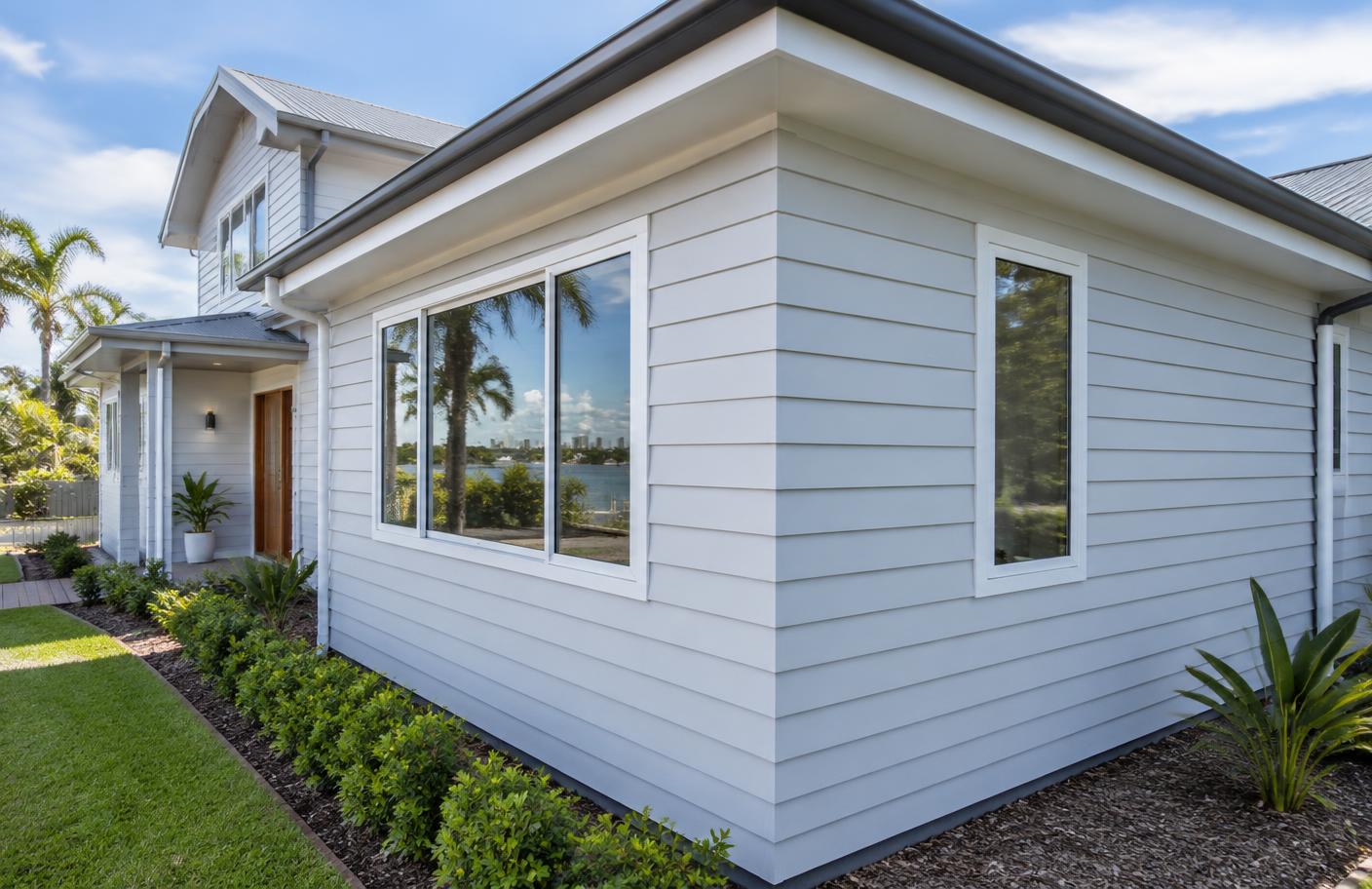
Orange Projects installs, replaces and repairs external cladding across the Gold Coast and Logan, including fibre cement systems such as HardiePlank, Linea, Axon, Stria, Matrix and EasyLap, plus timber weatherboards and composite cladding. Installed cladding typically costs $180-$400 per square metre depending on the product, with removal of existing cladding quoted separately. Correct battening, drainage cavity, sarking and flashings matter more than the board itself - that is what decides whether a coastal facade lasts.
- Typical range
- $180 - $400 per m2 installed
- Timeframe
- 3 days - 3 weeks
- Coverage
- All Gold Coast suburbs + Logan
- Credentials
- QBCC-licensed, insured
Overview
Cladding is the fastest way to change how a house reads from the street. A tired brick, fibro or rendered facade with new external cladding across the entry and upper level looks like a different home, at a fraction of the cost of a rebuild. It is also one of the most common requests we get from owners in Burleigh Heads, Palm Beach, Mermaid Waters, Helensvale and across Logan. We cover the whole service, not just one product: new cladding installation, replacement of old or damaged cladding, weatherboard replacement, and repairs to sections that have failed. Fibre cement, James Hardie systems, timber, timber weatherboards and composite are all on the table, and the right answer usually differs wall by wall depending on exposure and the look you are after. The risk with cladding is what sits behind it. A beautiful board fixed straight onto a wall with no drainage cavity, no sarking and no flashings will trap moisture and fail, and on the Gold Coast, with driving rain and salt air, it fails faster. Orange Projects installs cladding as a QBCC licensed contractor, which means we build the wall system, not just the surface.
What's included
- New external cladding installation for renovations, extensions and existing homes
- Cladding replacement and full re-clads over brick, render, fibro or old weatherboard
- Fibre cement cladding installation and replacement
- James Hardie systems - HardiePlank, Linea, Axon, Stria, Matrix, EasyLap
- Timber cladding - shiplap, weatherboard, board and batten, vertical shadowline
- Timber weatherboard replacement and profile matching on older homes
- Composite cladding installation
- Cladding repairs to damaged, split, cracked or deteriorated boards
- Battening, sarking, drainage cavity and vermin mesh
- Flashings, head and sill details, penetration sealing
- Soffits, eave linings and undercroft cladding
- External timber screening and privacy battens
- Prefinishing, oiling and coating of boards
- Assessment and rectification of timber found behind removed cladding
Cladding installation
New external cladding for renovations, extensions, alterations and existing homes. We set the wall system out first - breathable wrap, vertical battens, drainage cavity and vermin mesh - then install the boards or panels you have chosen. Whether that is a fibre cement weatherboard, a vertical panel system, timber or composite, the setout is what makes a finished elevation read as clean, even lines rather than a patchwork of joins and gaps. Window and door trims, corners, soffits and penetrations are planned before the first board goes on.
Cladding replacement and re-clads
Removal and replacement of old, damaged, deteriorated or simply outdated external cladding. This is where the biggest visual change comes from, and it is also the one opportunity you get to fix what is behind the wall - insulation, wrap, flashings and any timber needing attention. We manage removal and disposal, the new installation, and all the trims and flashings that finish it properly, keeping the house weathertight as we go rather than opening more wall than we can close in a day.
Fibre cement cladding
Fibre cement is the most widely used cladding on Queensland homes for good reason: it handles UV, salt air and driving rain with very little maintenance, it takes paint well, and it is available in profiles that range from traditional weatherboard to sharp contemporary panels. We install and replace fibre cement cladding systems across the Gold Coast and Logan, including the James Hardie products most people are familiar with, along with equivalents from other manufacturers where they suit the job better.
James Hardie cladding systems
James Hardie products cover most of the looks owners ask for, and we install them regularly. HardiePlank weatherboard for a classic Queensland profile, Linea weatherboard for a wider, deeper shadow line, Axon for vertical grooved panels, Stria for strong horizontal banding, Matrix for a contemporary expressed-joint facade, and EasyLap where a flat rendered-look sheet is wanted. Each has its own fixing, jointing and flashing requirements, and each has to be installed to the manufacturer's specification for the warranty to stand. We are not a single-brand installer, so if another product suits your wall, budget or look better, we will say so.
Timber cladding and weatherboards
Nothing imitating timber looks quite like timber. Shiplap, weatherboard, board and batten and vertical shadowline in spotted gum, blackbutt, merbau or cedar, used across full elevations or as an entry and upper-level feature. Timber weatherboard replacement on older homes is a regular job for us, where matching the existing profile is what keeps the house looking original rather than patched. The trade-off is maintenance: most exposed timber cladding on the Gold Coast needs recoating every 18 to 24 months, and more often on west and north elevations. We talk that through honestly, and offer composite or fibre cement where you want the look without the upkeep.
Cladding repairs
Repairs to cracked, split, water-damaged, impact-damaged or storm-damaged cladding, along with the associated carpentry, flashings and jointing. Where only part of an elevation has failed we can often repair and blend into the existing cladding, which keeps the cost well below a full re-clad. Where the underlying problem is the original installation - no cavity, missing flashings, boards hard against the ground - we will tell you plainly, because patching that kind of wall only buys a couple of years.
Timber damage behind existing cladding
Most re-clads come apart cleanly and the framing underneath is in good order. Occasionally, once the old cladding is off, some deterioration turns up in framing, battens, trims or sill members that nobody could have seen beforehand. If that happens we stop, photograph the exposed area, show you exactly what is there and price any rectification before we carry on. It is not something to plan for or worry about, just something worth knowing can happen, so if it does, you get a clear explanation and a number rather than a surprise.
The wall system behind the boards
A compliant cladding installation is a drained and ventilated cavity system: sarking or a breathable wrap on the frame, vertical battens creating an air gap, mesh top and bottom for vermin and ventilation, and boards fixed to the battens. Water that gets behind the boards - and it always does - drains out and the wall dries. Skipping the cavity to save a few hundred dollars is the single most common cause of the failed cladding we are called out to repair.
Details that decide whether it lasts
Head flashings over windows, correct sill and apron details, sealed penetrations for taps and lights, a clean ground clearance so boards are not wicking moisture, stainless or hot-dipped galvanised fixings near the coast, correct joint treatment on fibre cement, and end grain sealed before fixing. These are the details you cannot see on a finished job and cannot fix later without pulling the wall apart.
Cladding as part of a wider renovation
Cladding is often the finishing move on a bigger project - a raise and build under, a garage conversion, a facade update, or a deck and pergola package that needs the adjoining wall to match. Because we handle carpentry, decking, framing and finishing in-house, the cladding lines, deck level and window trims are set out together instead of three trades each doing their own thing.
Why choose Orange Projects
Licensed and insured
Orange Projects holds QBCC Licence No. 15620733 and carries the insurance needed for our work.
Local experience
We understand Gold Coast homes, coastal conditions and the practical details that affect local building work.
Clear written quotes
You receive an itemised quote after we inspect the site and confirm the scope.
Careful workmanship
Our carpenters and trade partners focus on solid work, clean details and a tidy site.
One point of contact
We coordinate the work and keep you informed from the first visit through to handover.
Straight answers
We explain the work, timing and decisions in plain language.
Suitable materials
We choose materials that suit the job and local weather conditions.
Workmanship support
We stand behind our work and explain the warranties that apply to your project.
Our process
- 1
Site visit
We inspect the property, measure the area and talk through what you need.
- 2
Written quote
You receive a clear, itemised quote with the agreed scope and inclusions.
- 3
Planning
We confirm timing, order materials and arrange approvals or certification where needed.
- 4
Construction
We complete the work, keep the site tidy and update you as the job moves forward.
- 5
Handover
We check the finished work with you and provide the documents and warranties that apply.
Areas we service on the Gold Coast
Servicing the Gold Coast and Logan, including these Gold Coast areas:
- Robina
- Burleigh Heads
- Mermaid Waters
- Helensvale
- Hope Island
- Coomera
- Southport
- Broadbeach
- Palm Beach
- Miami
- Varsity Lakes
- Ashmore
We also service Logan:
Cladding Gold Coast by suburb
Find clear local information about cladding gold coast, site access and common project needs.
Gold Coast
- Cladding Gold Coast Arundel
- Cladding Gold Coast Ashmore
- Cladding Gold Coast Benowa
- Cladding Gold Coast Biggera Waters
- Cladding Gold Coast Bilinga
- Cladding Gold Coast Bonogin
- Cladding Gold Coast Broadbeach
- Cladding Gold Coast Broadbeach Waters
- Cladding Gold Coast Bundall
- Cladding Gold Coast Burleigh Heads
- Cladding Gold Coast Burleigh Waters
- Cladding Gold Coast Carrara
- Cladding Gold Coast Chevron Island
- Cladding Gold Coast Clear Island Waters
- Cladding Gold Coast Coolangatta
- Cladding Gold Coast Coomera
- Cladding Gold Coast Currumbin
- Cladding Gold Coast Currumbin Valley
- Cladding Gold Coast Currumbin Waters
- Cladding Gold Coast Elanora
- Cladding Gold Coast Gaven
- Cladding Gold Coast Gilston
- Cladding Gold Coast Helensvale
- Cladding Gold Coast Highland Park
- Cladding Gold Coast Hope Island
- Cladding Gold Coast Isle of Capri
- Cladding Gold Coast Jacobs Well
- Cladding Gold Coast Kirra
- Cladding Gold Coast Labrador
- Cladding Gold Coast Main Beach
- Cladding Gold Coast Maudsland
- Cladding Gold Coast Mermaid Beach
- Cladding Gold Coast Mermaid Waters
- Cladding Gold Coast Merrimac
- Cladding Gold Coast Miami
- Cladding Gold Coast Molendinar
- Cladding Gold Coast Mudgeeraba
- Cladding Gold Coast Nerang
- Cladding Gold Coast Nobby Beach
- Cladding Gold Coast Ormeau
- Cladding Gold Coast Oxenford
- Cladding Gold Coast Pacific Pines
- Cladding Gold Coast Palm Beach
- Cladding Gold Coast Paradise Point
- Cladding Gold Coast Paradise Waters
- Cladding Gold Coast Parkwood
- Cladding Gold Coast Pimpama
- Cladding Gold Coast Reedy Creek
- Cladding Gold Coast Robina
- Cladding Gold Coast Runaway Bay
- Cladding Gold Coast Sanctuary Cove
- Cladding Gold Coast Southport
- Cladding Gold Coast Sovereign Islands
- Cladding Gold Coast Surfers Paradise
- Cladding Gold Coast Tallai
- Cladding Gold Coast Tallebudgera
- Cladding Gold Coast Tugun
- Cladding Gold Coast Upper Coomera
- Cladding Gold Coast Varsity Lakes
- Cladding Gold Coast Willow Vale
- Cladding Gold Coast Worongary
Cladding near you - Gold Coast and Logan
Local cladding pages covering installation, replacement, material choice and installed costs in each area.
Gold Coast
- Cladding Gold Coast
- Cladding Surfers Paradise
- Cladding Main Beach
- Cladding Isle of Capri
- Cladding Chevron Island
- Cladding Paradise Waters
- Cladding Runaway Bay
- Cladding Biggera Waters
- Cladding Labrador
- Cladding Sovereign Islands
- Cladding Sanctuary Cove
- Cladding Currumbin
- Cladding Currumbin Waters
- Cladding Elanora
- Cladding Reedy Creek
- Cladding Nerang
- Cladding Pacific Pines
- Cladding Oxenford
- Cladding Upper Coomera
- Cladding Parkwood
- Cladding Bundall
- Cladding Tallai
- Cladding Worongary
- Cladding Burleigh Heads
- Cladding Palm Beach
- Cladding Robina
- Cladding Southport
- Cladding Broadbeach Waters
- Cladding Mermaid Waters
- Cladding Hope Island
- Cladding Paradise Point
- Cladding Varsity Lakes
- Cladding Mudgeeraba
- Cladding Coomera
- Cladding Helensvale
- Cladding Miami
- Cladding Mermaid Beach
- Cladding Broadbeach
- Cladding Burleigh Waters
- Cladding Clear Island Waters
- Cladding Carrara
- Cladding Benowa
- Cladding Ashmore
- Cladding Coolangatta
- Cladding Tugun
- Cladding Pimpama
- Cladding Ormeau
- Cladding Arundel
- Cladding Molendinar
- Cladding Highland Park
- Cladding Gilston
- Cladding Maudsland
- Cladding Merrimac
- Cladding Nobby Beach
- Cladding Tallebudgera
- Cladding Bilinga
- Cladding Kirra
- Cladding Bonogin
- Cladding Currumbin Valley
- Cladding Gaven
- Cladding Jacobs Well
- Cladding Willow Vale
Frequently asked questions
How much does cladding cost on the Gold Coast?
Installed cladding typically runs $180-$400 per square metre depending on the product. Fibre cement systems such as HardiePlank, Linea, Axon and Stria sit toward the lower and middle of that range, composite in the middle, and hardwoods such as spotted gum and blackbutt toward the upper end. Removing and disposing of existing cladding, scaffold and painting are quoted separately. Every quote is fixed-price after a site measure.
Do you replace existing cladding?
Yes. Cladding replacement is a large part of what we do - removing old, damaged, deteriorated or dated weatherboards, fibro or sheet cladding and installing a new fibre cement, weatherboard, timber or composite system with correct wrap, cavity and flashings behind it.
Do you install James Hardie cladding?
Yes. We install the James Hardie range including HardiePlank and Linea weatherboards, Axon and Stria, Matrix and EasyLap, installed to the manufacturer's specification. We also install timber, composite and other fibre cement brands, so the product recommended is the one that suits your home rather than the one we happen to stock.
What is the difference between fibre cement and timber cladding?
Fibre cement is stable, resistant to UV, salt and moisture, and needs little more than repainting every several years. Timber has depth and warmth that no product fully replicates, but needs recoating every 18-24 months on exposed elevations. Many homes end up with fibre cement on the hard-hit walls and timber on sheltered entries and features.
Can you replace timber weatherboards on an older home?
Yes. We replace damaged or rotted weatherboards and match the existing profile, or replace a full elevation with a fibre cement weatherboard such as HardiePlank or Linea where the original boards are past economical repair. We price both options so you can compare.
What happens if there is damaged timber behind the old cladding?
Most homes come apart cleanly. If deterioration does turn up in framing, battens or trims once the cladding is off, we stop, show you the exposed area with photos and provide a clear price for the rectification before continuing. Nothing additional is carried out without your approval.
Do I need council approval to re-clad my house?
Small feature cladding to an existing compliant wall generally does not require approval. A full re-clad, changes to fire-separation walls, work in a character or heritage overlay, or work that alters the building envelope usually does. We confirm the requirement before quoting and lodge where needed.
What is the best cladding for a beachfront home?
For high salt and UV exposure we usually recommend fibre cement or composite cladding with stainless fixings, or a durable hardwood such as spotted gum if you are committed to regular oiling. The fixings, cavity and flashing detailing matter as much as the board selection.
How often does timber cladding need re-oiling?
Most exposed timber cladding on the Gold Coast needs recoating every 18-24 months, and more often on west and north elevations. Shaded and protected elevations can stretch to three years. Composite and fibre cement cladding need washing and periodic repainting only.
Can you clad over existing brick?
Yes. We fix a treated batten framework to the brickwork, install the wrap and drainage cavity, then clad over it. It is a popular way to modernise 1970s and 1980s brick homes and adds an insulating air gap behind the boards.