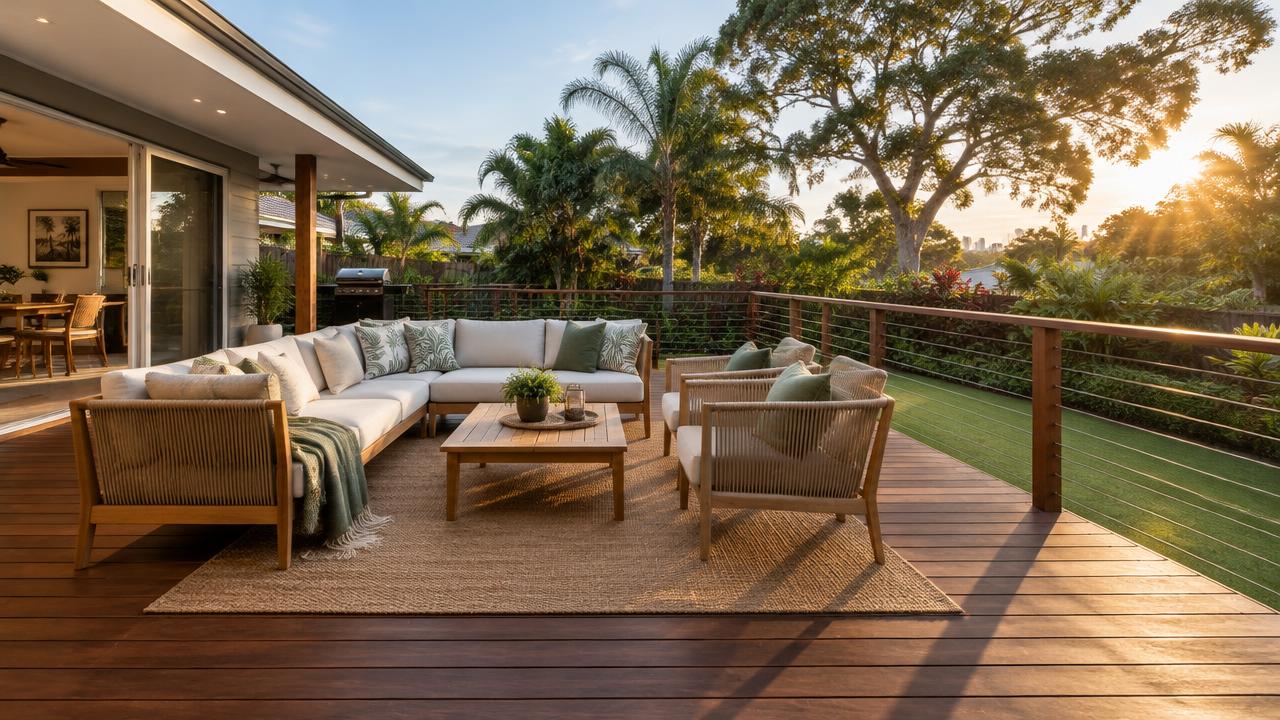
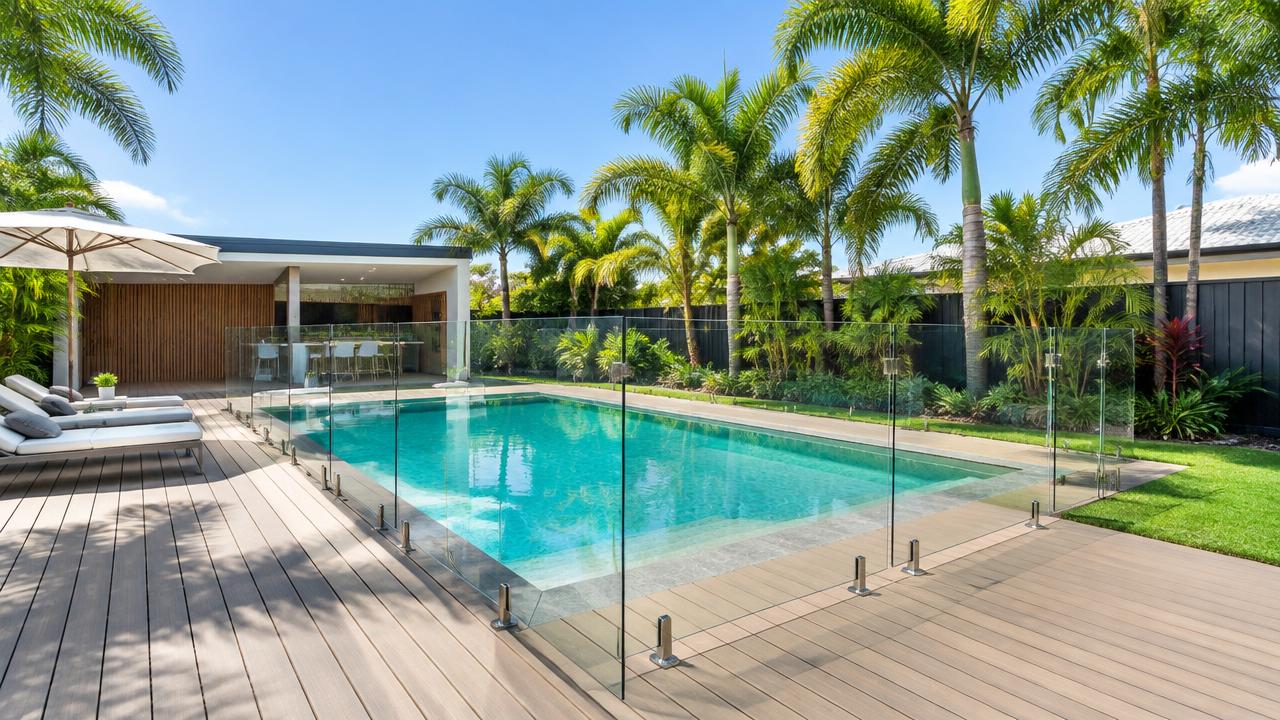
Composite decking has improved a lot, and there are now plenty of brands sold in Australia. Rather than crown one brand, this guide explains which features matter in our climate so you can compare any board on a level footing.
The best composite decking for the Gold Coast is a fully capped board with strong UV resistance, a lighter colour for areas in full sun, a long residential warranty and a hidden fixing system. Supplied and installed, composite decking costs $450 to $700 per m².
What to compare
- Capping. Capped boards have a hard outer shell that resists fading, staining and moisture far better than older uncapped boards.
- Heat. All composite warms up in sun, and dark colours most of all. Ask for lighter shades or boards designed to run cooler where the deck gets afternoon sun.
- Fade and stain warranty. Read what is actually covered. Structural warranties and fade warranties are often separate.
- Fixings. Hidden clips give a clean look and allow for expansion. Coastal sites need stainless or coated fixings.
- Board movement. Composite expands in heat, so the installer must follow the maker's gap rules or boards can buckle.
The frame matters as much as the board
Composite boards do not rot, but the frame underneath is usually still timber or steel. Joist spacing must match the board's span rating, and the frame needs airflow and drainage. A premium board on a poor frame will still fail.
Is composite worth it over timber?
Composite costs more up front than hardwood ($450 to $700 per m² against $350 to $550 per m²) but avoids oiling for the life of the deck. Our timber vs composite decking guide compares them side by side, and our composite decking maintenance guide covers upkeep.
Want help choosing a board for your site? See our [composite decking Gold Coast](/composite-decking) service or request a free quote.
Request a free quote