A deck is one of the few renovations that pays you back every weekend you use it, but on the Gold Coast it also takes a beating. Salt-laden air, harsh UV and sudden downpours are hard on structures that look identical to their southern cousins on a brochure but perform very differently once they are outside for a few summers. This guide is about materials, real costs and the build decisions that determine whether your deck is still solid in fifteen years.
Decking on the Gold Coast typically costs between $175 and $600 per square metre supplied and installed, depending on the material and substructure. Treated pine sits at the budget end, hardwoods like merbau and spotted gum in the middle to upper range, and composite decking at a similar or slightly higher range with far less ongoing maintenance.
Why the Gold Coast is a tough climate for decking
Coastal suburbs from Coolangatta to Southport deal with salt spray that can travel a surprising distance inland, humidity that swells and shrinks timber through the day, and UV levels that fade and dry out surfaces faster than most manufacturers' warranty documents assume. Add sandy soils that suit termites from Burleigh through to Coomera, and it is easy to see why a deck built for a milder climate can start showing problems within a few years.
What decking materials cost in 2026
| Material | Typical cost per m² | Notes |
|---|---|---|
| Treated pine | $175 to $345 | Budget option, needs regular sealing and is less suited to full sun exposure |
| Merbau hardwood | $295 to $540 | Popular local choice, warm colour, needs oiling roughly twice a year on the coast |
| Spotted gum hardwood | $345 to $590 | Premium native hardwood, very durable, still needs periodic oiling |
| Composite decking | $275 to $540 | Low maintenance, consistent colour, gets hotter underfoot in direct sun than timber |
These figures line up with what several Gold Coast decking specialists are quoting in 2026, with the widest published range for full projects sitting between $15,000 and $80,000-plus depending on size, features and site access. We have already written a full head-to-head comparison of timber versus composite, including maintenance and lifespan, in our timber vs composite decking guide, so we will not repeat that comparison here.
What actually drives the price on your job
- Height above ground. A deck more than a metre off the ground needs balustrading and stronger footings, which adds cost quickly.
- Substructure. Steel or treated pine bearers and joists, correctly spaced for coastal wind loads, cost more than a minimal frame but stop the boards from moving.
- Access. Tight side access or sloping blocks add labour time before a single board goes down.
- Extras. Stairs, built-in seating, lighting and balustrading are usually priced separately and add $5,000 to $25,000 depending on scope.
- Council requirements. Decks above a certain height, or near a boundary, often need approval, which adds time and a modest fee.
Do you need council approval?
Many low-set decks are exempt, but height, proximity to boundaries and whether the deck is attached to the house all matter. Our separate guide on council approval for a deck in Queensland walks through when you need a building certifier involved and when you do not.
What lasts, and what does not
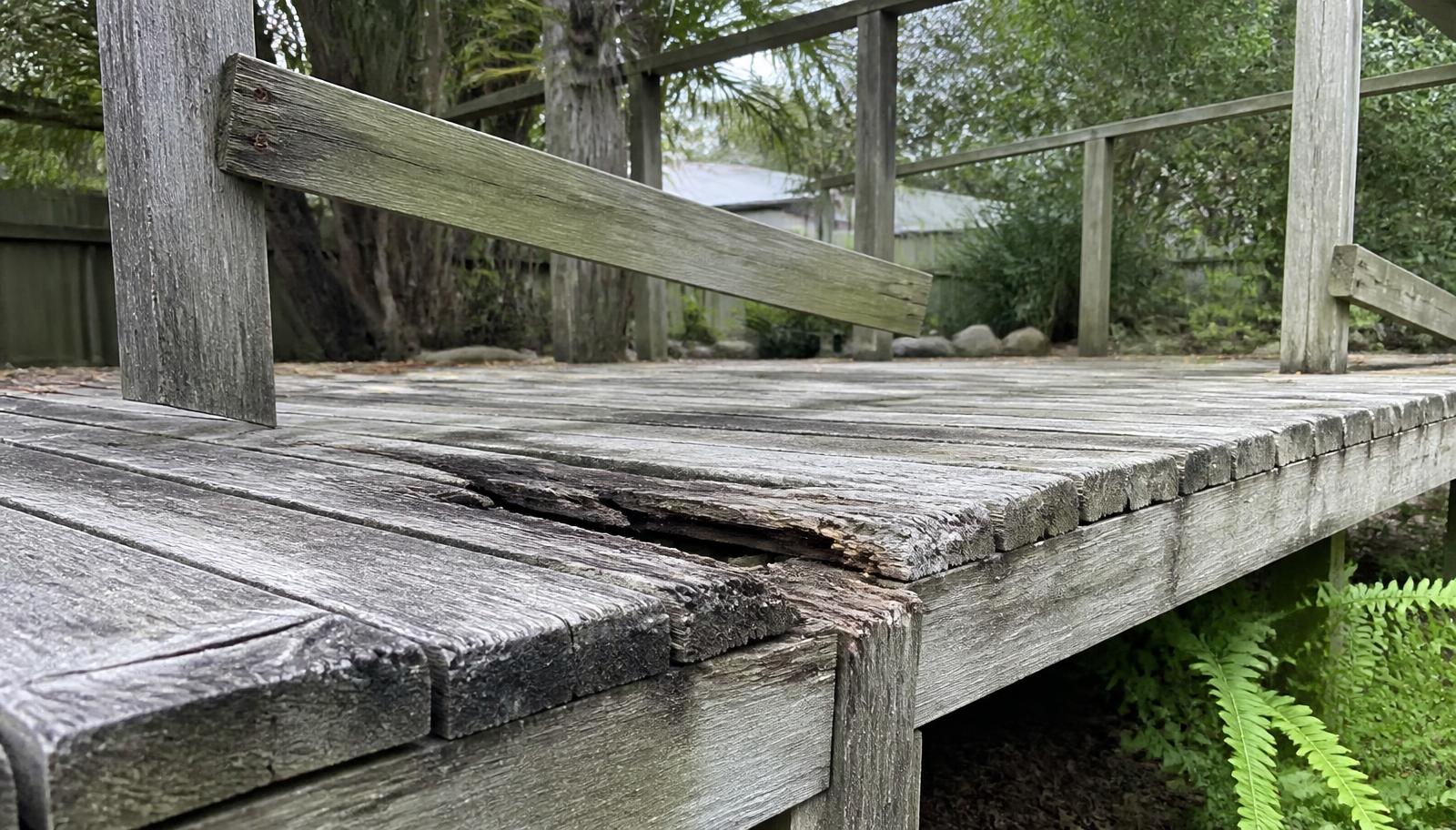
On the Gold Coast, stainless steel fixings are worth the extra cost over galvanised, because standard fasteners can start rusting and staining boards within a few years this close to the ocean. Hardwood decks need oiling closer to twice a year rather than the annual schedule that suits cooler climates, a point covered in more detail in our article on signs a timber deck needs replacing. Composite decking avoids the oiling cycle entirely but does run hotter underfoot in full sun, so orientation and shade matter more with composite than with timber.
If your deck sits within a few hundred metres of the beach, ask your builder specifically about fixing hardware and frame treatment. The boards get most of the attention in a quote, but the frame and fixings are what actually fail first in a salty environment.
How a deck build typically runs
- Site inspection, design and a fixed price quote.
- Council approval check, and lodgement if required.
- Footings and substructure, engineered for the deck height and span.
- Framing in treated pine or steel.
- Decking board installation, with stainless fixings in coastal areas.
- Balustrading, stairs and any built-in features.
- Final oiling or sealing where required, and handover.
Questions worth asking before you commit
- Is the substructure timber or steel, and is it rated for the deck's height and span?
- What fixings are being used, and are they suitable for a coastal environment?
- Is council approval needed for this design, and who is arranging it?
- What is the realistic maintenance schedule for the material you have chosen?
- Does the quote include balustrading, stairs and lighting, or are these extra?
If you are also weighing up a covered structure over the deck, our comparison of pergolas versus decks and our guide to outdoor entertaining areas both cover how the two work together.
Thinking about a new deck on the Gold Coast or in Logan? We will talk through materials for your specific site and give you a fixed price before any work starts.
Request a free quote