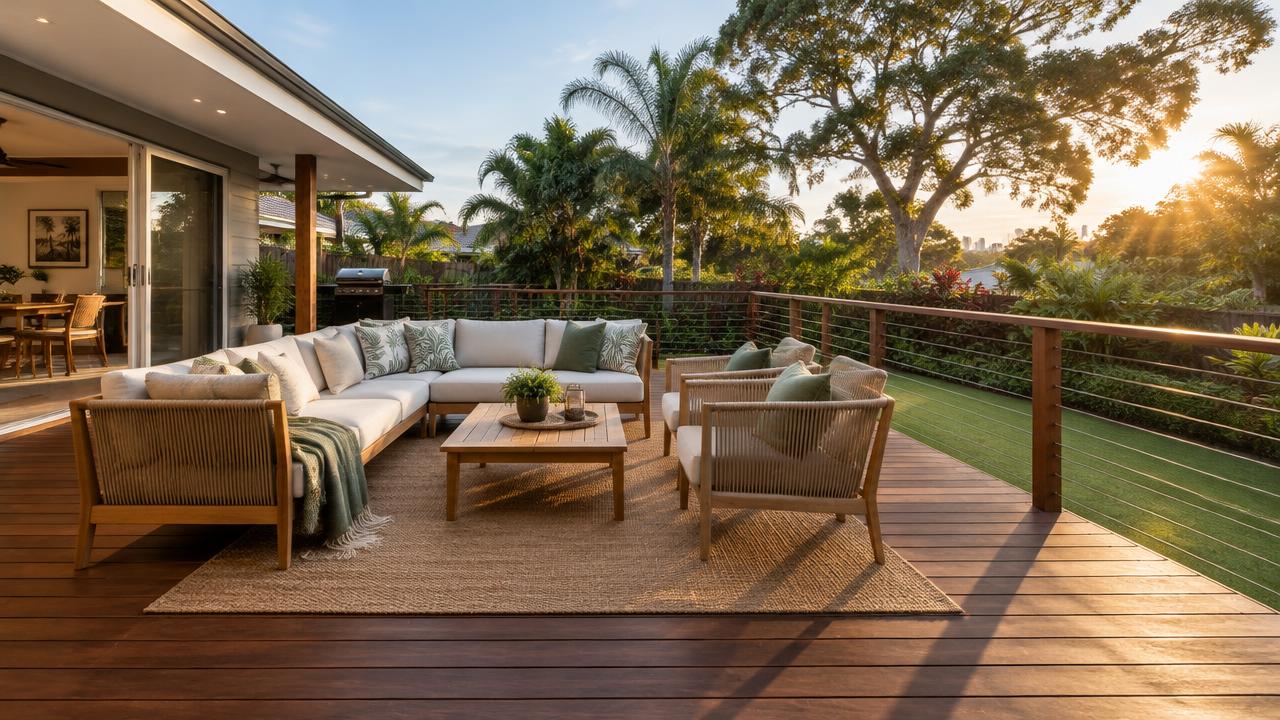
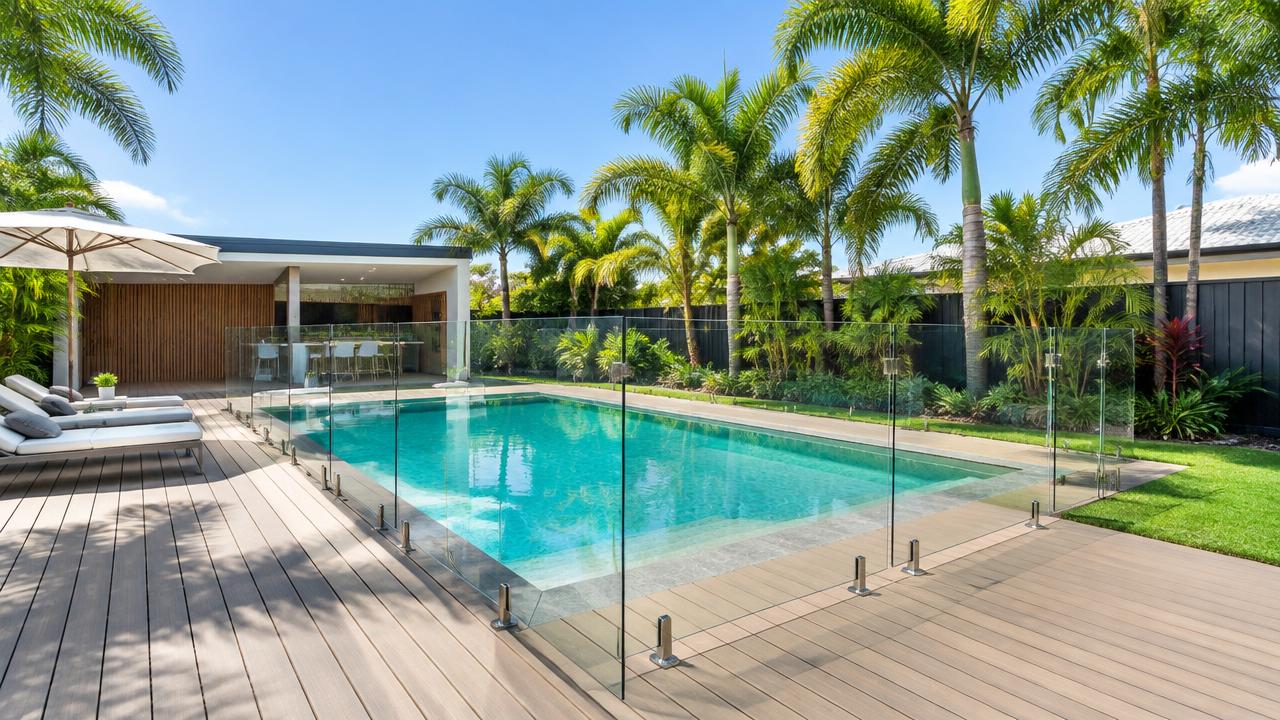
A pool deck copes with a different set of demands to a normal outdoor deck. It gets splashed with chlorinated or salt water daily, it sits in full sun for hours with glare bouncing off the water surface, and it has bare feet walking across it in every direction. On the Gold Coast, add genuine sea salt exposure and you have a surface that will punish the wrong material choice within a couple of summers. This guide covers what actually works.
Pool decking on the Gold Coast typically costs between $6,500 and $15,000-plus for a standard surround, depending on material and size. Composite and quality hardwood are the most common choices because they stay cooler underfoot and resist splash damage better than treated pine, while any pool deck must also meet non-slip and pool barrier requirements.
What pool decking materials cost
| Material | Typical price guide | Notes |
|---|---|---|
| Merbau or hardwood, treated pine frame | From about $6,500 to $10,000 for a 6m x 4m deck | Classic look, needs oiling more often near chlorine and salt splash |
| Composite decking | Similar to hardwood, often slightly higher per m² | Low maintenance, resists splitting from constant wet-dry cycling |
| Spray-on non-slip concrete resurfacing (spraycrete) | Priced per square metre, generally lower than a full timber rebuild | Good option when the existing slab is sound but slippery or faded |
Specialist pool decking builders quote pool decks from around $6,500 for a modest hardwood surround with a treated pine frame, and a resurfacing option for tired concrete pool surrounds is a genuine alternative to a full rebuild if the slab underneath is still sound.
Timber near pools: treated pine is not the answer
Treated pine is fine as a frame, hidden underneath the deck, but it is a poor choice for the visible decking boards around a pool because it tends to crack and split with constant wetting and drying. Merbau and spotted gum handle this better, and composite handles it better again because it does not absorb water the way timber does.
Non-slip surfaces matter more here than anywhere else
- Timber and composite boards with a grooved or brushed finish give better grip when wet than a smooth board.
- Smooth trowelled concrete becomes genuinely dangerous once it is wet, which is why bare concrete pool surrounds are commonly resurfaced with a textured, slip-resistant coating.
- Colour matters for comfort, not just looks. Darker composite and dark pavers absorb more heat and can become uncomfortable underfoot on a 35 degree day, so lighter tones are worth considering for pool surrounds in full sun.
Pool barrier requirements
Any deck built around or near a swimming pool in Queensland needs to be considered as part of the pool's safety barrier. Fencing height, gate self-closing mechanisms, and the non-climbable zone around the barrier all have to be maintained even after a new deck is added. If your deck design changes fence lines, gate positions or adds anything a child could climb near the barrier, this needs to be checked against the current pool safety standard before work starts, and typically requires a pool safety inspection and certificate once complete.
Get your pool safety certificate confirmed as part of the deck project, not as an afterthought. Reconfiguring a deck near the pool fence is one of the more common reasons an existing certificate lapses.
Salt water pools add another layer
Saltwater chlorination systems mean the water sitting on your deck boards and fixings carries a genuine salt load, on top of whatever salt air is already reaching the site from the coast. This is exactly the situation where stainless steel fixings earn their keep, and where a quality composite board or well-sealed hardwood outperforms a budget timber that was never really designed for constant salt exposure.
Planning a pool deck project
- Confirm whether the existing pool barrier will be affected by the new deck design.
- Choose a decking material rated for constant wet exposure, not just outdoor use generally.
- Specify a non-slip surface finish, particularly on any steps or coping.
- Use stainless steel fixings throughout, especially with a saltwater pool.
- Book a pool safety inspection once the deck and any fencing changes are complete.
Ask your builder about these before starting
- Is the decking material rated for constant splash and wet-dry cycling?
- Will the deck design affect the existing pool barrier or gate clearances?
- What non-slip finish is being used, particularly near steps and the pool edge?
- Are stainless steel fixings included given the pool and coastal exposure?
- Who is arranging the pool safety certificate once work is complete?
If you are still deciding between materials generally, our broader decking on the Gold Coast guide and our timber versus composite comparison cover the wider decision in more depth.
Planning a new pool deck on the Gold Coast or in Logan? We will help you choose a material that handles the pool, the sun and the salt air, with a fixed price before work starts.
Request a free quote